
A bespoke, written document that codifies your family’s values, ownership principles, decision-making rules, and vision for the future. The foundational governance document for every family business that intends to endure.
As families expand in both size and complexity, varying perspectives on decision-making, family involvement, and ownership naturally arise among members. Establishing clarity ensures that expectations of and from the business are defined and mutually understood. A family constitution emerges as a binding force, actively preventing the misunderstandings that stem from differing views within the family.
Without a written record of what the family stands for, how it makes decisions, and what it is building, each generation must reconstruct that understanding from scratch. And in the gaps between what different family members believe, conflict takes root.
A family constitution closes those gaps. It is the written record of the family’s collective agreement about who they are, what they value, how they make decisions, and where they are going together. It is the document that gives every generation, present and future, a shared foundation to stand on.
Family Biz Solutions helps families create that document.
A family constitution, sometimes called a family charter or family protocol, is a written document that formally records the shared values, ownership principles, governance policies, decision-making rules, and long-term vision of a family business. It is the primary governance document of the family, sitting above the legal and corporate documents of the business and giving them meaning, context, and human purpose.
Unlike the articles of association, a shareholders agreement, or other legal documents, the family constitution is not primarily a legal instrument. It is a statement of intent, a record of agreement, and a framework for how the family will navigate the decisions and challenges that every family business must face over time.
A well-crafted family constitution is a binding force within the family. It establishes written rules and policies as reference points that every family member can turn to when questions arise. It addresses potential conflicts before they escalate and outlines mediation procedures that protect against disputes. It documents the governance roadmap, particularly the formalised decision-making process as the business transitions from a founder-led structure to a sibling partnership or multi-generational governance model. And it proactively develops a system that ensures everyone can identify their role, promoting inclusivity and a sense of genuine value for every family member.
The family constitution is not a static document. It is a living record of the family’s agreements, reviewed and updated as the family and the business evolve over time.
The family constitution is, the single most impactful governance document a family business can create. Here is why.
It replaces assumption with agreement. Most family business conflicts do not arise because family members have fundamentally different values. They arise because family members have different assumptions about what shared values mean in practice. One sibling assumes the business will always remain in family hands. Another assumes that a sale would be acceptable if the price were right. Neither assumption has ever been discussed, let alone agreed. The family constitution forces those conversations, surfaces those assumptions, and replaces them with explicit, agreed principles that every family member understands and has committed to.
It provides a framework for resolving conflict. When disagreements arise in a family business, and they always do, the family constitution provides the framework within which they can be resolved. Rather than each dispute being fought from first principles, with all the emotional intensity that entails, the family constitution provides an agreed set of rules and principles that both parties can refer to. This does not eliminate conflict, but it gives the family a structured, dignified way to manage it.
It defines the governance roadmap. As a business transitions from a founder-led structure to a sibling partnership or multi-generational model, the informal ways of making decisions must be replaced with something more deliberate and durable. The family constitution documents that roadmap, providing clarity on how decisions are made, who has authority over what, and how the family will govern itself as it grows.
It promotes inclusivity and a sense of value for every member. One of the most frequently cited frustrations in family businesses is that certain family members feel excluded from decisions that affect them. A family constitution proactively addresses this by defining roles, establishing forums for family participation, and ensuring that every member of the family understands their place within the governance structure. When people understand their role, they feel valued. And when family members feel valued, the business is stronger for it.
It protects the business across generations. The founder’s generation understands the business intimately. The second generation knows it well. By the third generation, family members may be shareholders in a business they have limited personal connection to. Without a family constitution, the risk of misaligned expectations, ownership disputes, and loss of family cohesion around the business increases with every generation. The family constitution is the mechanism through which the founding generation transmits not just ownership but understanding, values, and commitment to the generations that follow.
It strengthens the business’s governance credibility. Banks, investors, and large corporate partners increasingly expect to see evidence of strong governance in the family businesses they work with. A family constitution is one of the most powerful demonstrations of governance maturity a family business can provide. It signals that the family has done the difficult work of reaching explicit agreement about how it will manage the business, and that the business is governed by principle rather than by whoever holds the most power at any given moment.
Families often face significant challenges when initiating the governance process. The primary barrier is rarely a lack of willingness. It is the discomfort associated with reevaluating the status quo and engaging in the difficult conversations that a family constitution requires. Questions about ownership, about who should be involved in the business, about what happens when family members disagree, are conversations that many families have been deferring for years precisely because they are hard.
Bringing in an external advisor to guide the process addresses this barrier in two important ways.
First, it injects the urgency and momentum that families rarely generate on their own. The presence of an external advisor signals that this process is real, it is happening now, and it has the commitment of the family behind it. That signal alone is often enough to unlock conversations that have been avoided for years.
Second, it provides the impartial perspective that internal family discussions can rarely achieve. When a family member raises a difficult topic, it is filtered through the history and dynamics of every relationship in the room. When an independent advisor raises the same topic, it can be heard more clearly, discussed more openly, and resolved more effectively. The advisor’s role is not to take sides or to impose solutions. It is to create the conditions in which the family can reach genuine agreement, and then to document that agreement faithfully.
At Family Biz Solutions, our advisors bring both the professional expertise and the family business insider understanding to guide this process with the care, skill, and sensitivity it demands.
We begin every functional advisory engagement by listening carefully. We do not arrive with a predetermined solution. We invest time in understanding the specific function you want to improve, the people responsible for it, the history behind how it has developed, and the family and business context that shapes it.
From that understanding, our engagements move through the following stages.
We begin with a comprehensive assessment of the family, the business, and the governance context. We review the ownership structure, the existing governance arrangements, the family's history and dynamics, and the key issues that the constitution needs to address. This assessment gives us the foundation we need to design a process that is right for this specific family and business.
Before any group sessions take place, we conduct individual, confidential interviews with each family member. These conversations allow us to understand each person's perspective, priorities, concerns, and hopes for the process without the dynamics of group discussion influencing what they share. The individual interviews are one of the most important elements of our process. They ensure that every family member's voice is heard, and they allow us to identify the topics that will require the most careful facilitation in the group sessions that follow.
Drawing on the assessment and the individual interviews, we produce a preliminary draft of the family constitution. This draft reflects the themes, values, and principles that emerged from the individual conversations, structured into a clear governance document. The preliminary draft is circulated to all family members for their review and initial feedback before any group sessions take place, giving everyone the opportunity to engage with the material in their own time.
We facilitate a series of structured family workshops in which the family works through the draft constitution together, discussing, refining, and reaching genuine consensus on each element. These workshops are carefully facilitated to ensure that every family member has a genuine voice in the process and that the outcomes reflect real agreement rather than the preferences of the most vocal or most senior family members. This is the most important stage of the process and the one that determines whether the constitution will truly be owned by the family.
As the constitution takes shape, we work with the family to establish the family council that will be responsible for its ongoing stewardship. This includes defining the role and composition of the family council, agreeing the terms of reference for its meetings, and ensuring that the family council is properly connected to the board of directors and the broader governance structure of the business.
The finalised family constitution is formally presented to the whole family, ratified through a structured family meeting, and celebrated as the significant achievement it represents. The ratification meeting is an important moment. It signals the family's collective commitment to the principles and policies they have agreed, and it marks the beginning of a new chapter in the governance of the business. We encourage families to mark this moment meaningfully, because the family constitution deserves to be introduced with the gravity and the pride it warrants.
Immediately following ratification, we facilitate the first formal meeting of the family council. This inaugural meeting establishes the rhythm and disciplines of family governance, ensures that family council members understand their roles and responsibilities, and begins the process of embedding the constitution into the life of the family and the business. Starting well matters. The habits established in the first family council meeting tend to set the tone for the governance that follows.
Every family constitution developed by Family Biz Solutions is bespoke. The structure and content of the document will reflect the specific family, business, and governance context of each client. However, most family constitutions cover the following areas.

The family's shared vision for the future of the business and the legacy it is building. Why does this business exist beyond its commercial purpose? What does the family want it to stand for? What does success look like for the next generation and the generation after that?
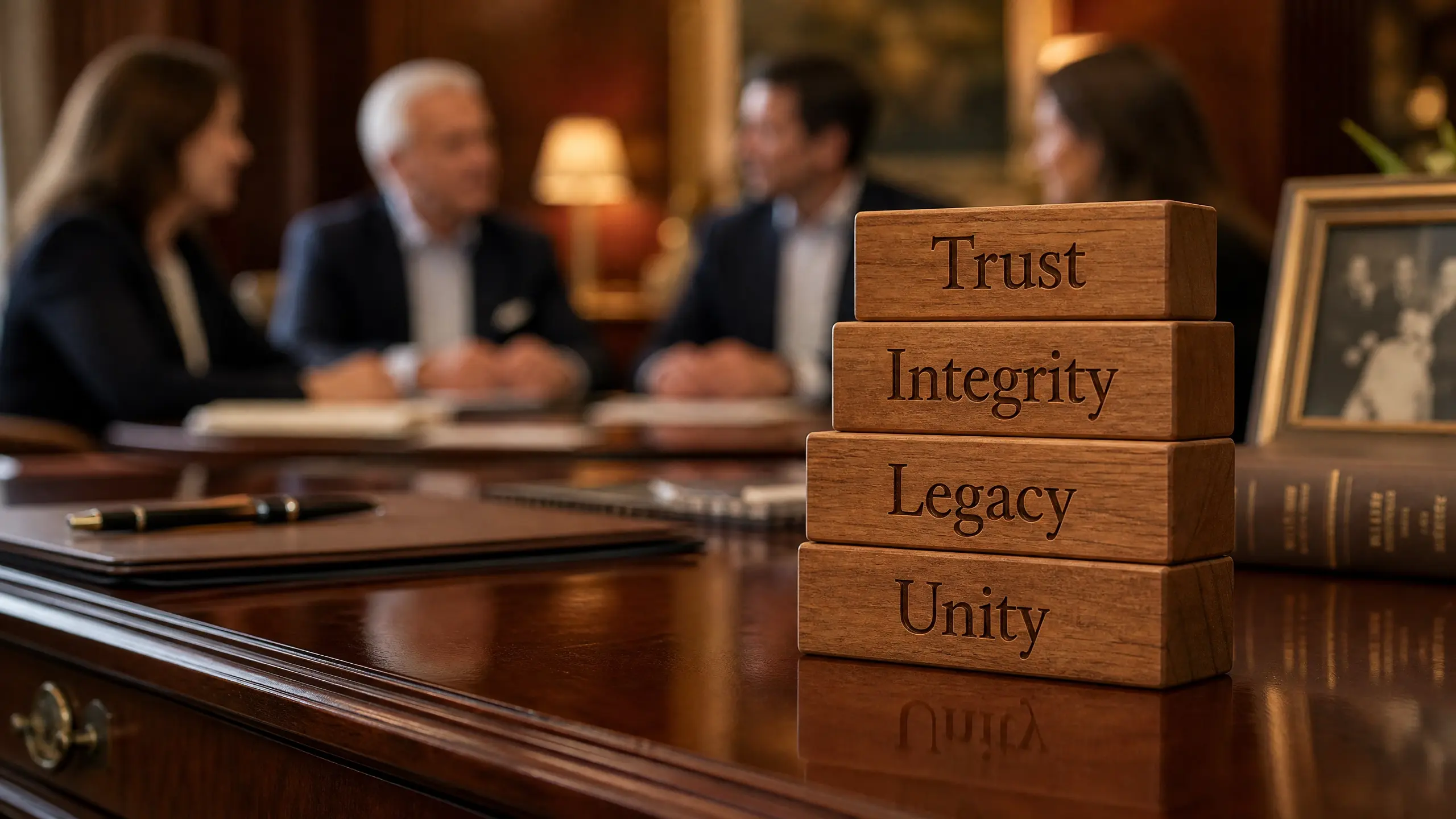
A clear articulation of the values that have guided the family business since its founding and that will continue to guide it into the future. This section gives the constitution its human foundation and provides the lens through which all of the policies and principles that follow should be understood.
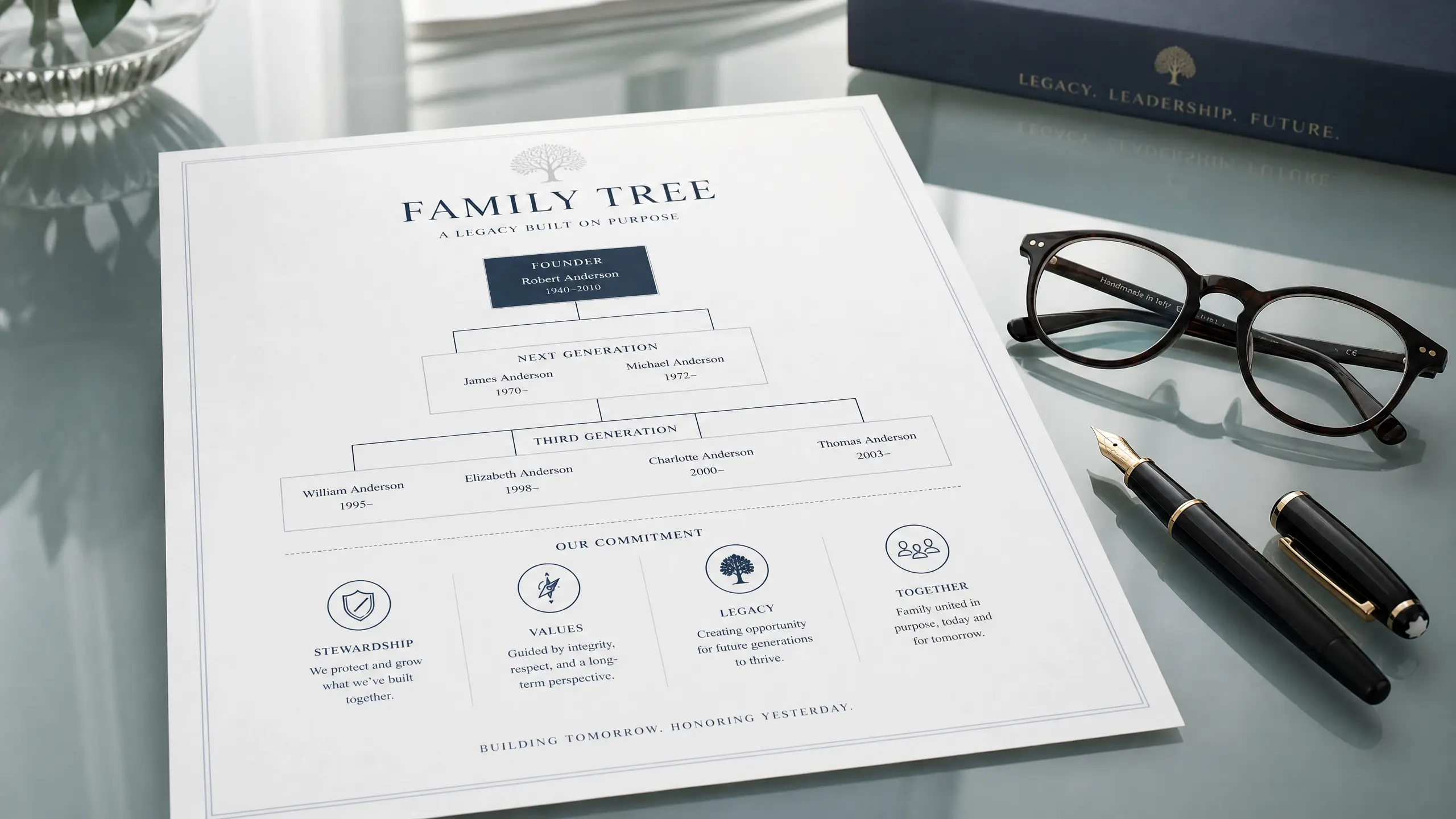
The principles that govern how ownership of the business is held and managed. How ownership can be transferred between family members. The principles governing the valuation of family shares. The circumstances under which family members can exit the business as shareholders and the process by which that is managed. The principles governing the admission of new family shareholders, including spouses and children.

A clear framework for how decisions are made across the governance structure of the business. Which decisions are reserved for the family as a whole? Which are delegated to the board of directors? Which are management decisions that the family and board should not interfere with? How are family decisions made when unanimity is not possible? A clear decision-making framework is one of the most conflict-preventing elements of a well-designed family constitution.

The agreed process for managing disputes between family members relating to the business. How are disputes raised? Who facilitates the resolution process? At what point is external mediation sought? A clear, agreed dispute resolution process dramatically reduces the risk that family disagreements will escalate into legal conflicts or business disruption.
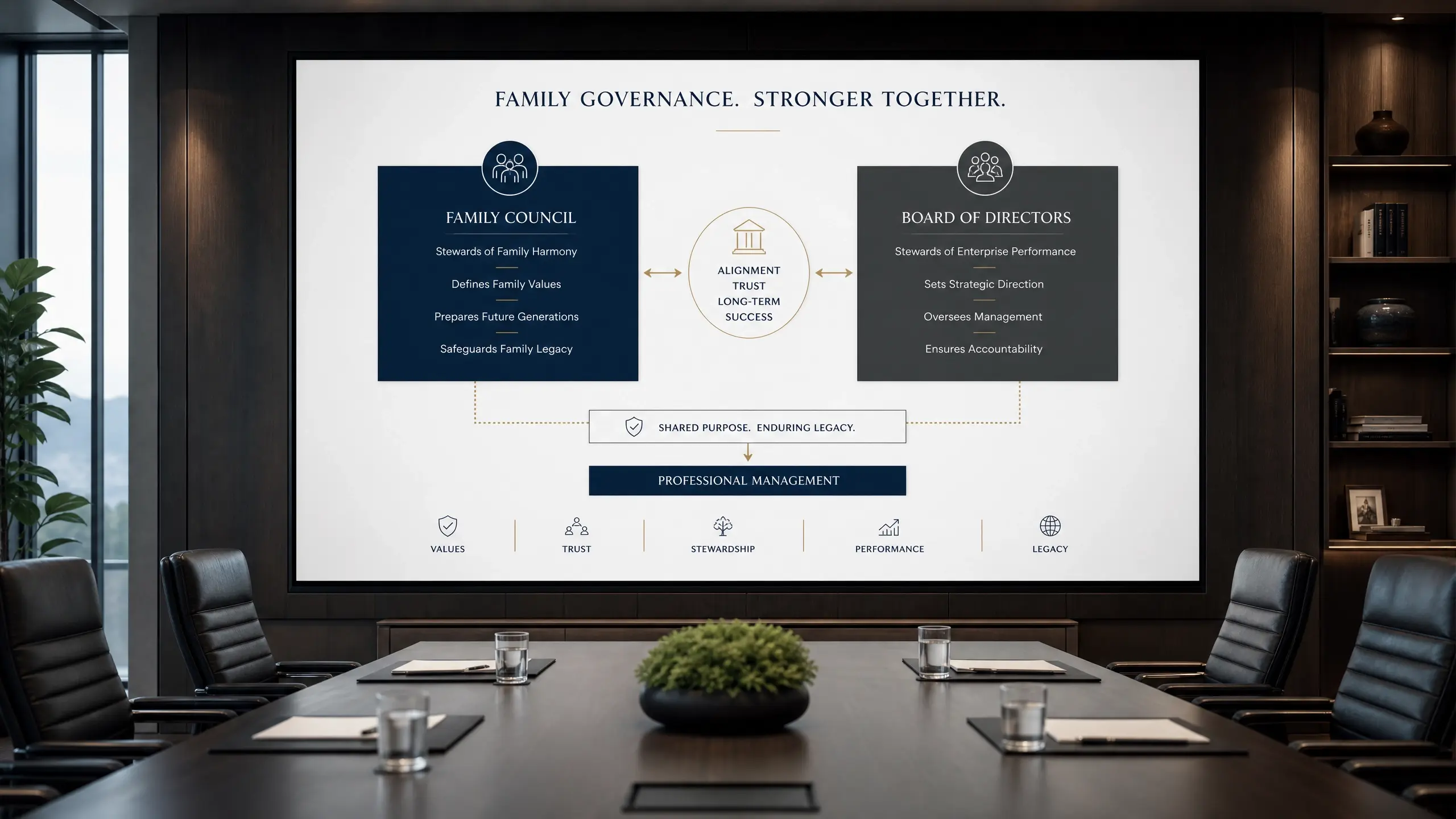
The structure and role of the family council, the family assembly, and the relationship between these bodies and the board of directors. How family members are represented in the governance of the business. The frequency and format of family governance meetings. The process for making changes to the family constitution itself.

The principles that govern the broader relationship between the family and the business. How family members who are not employed in the business are kept informed and engaged. How the business communicates with family shareholders. The principles governing dividends and the balance between reinvestment in the business and distributions to family shareholders.
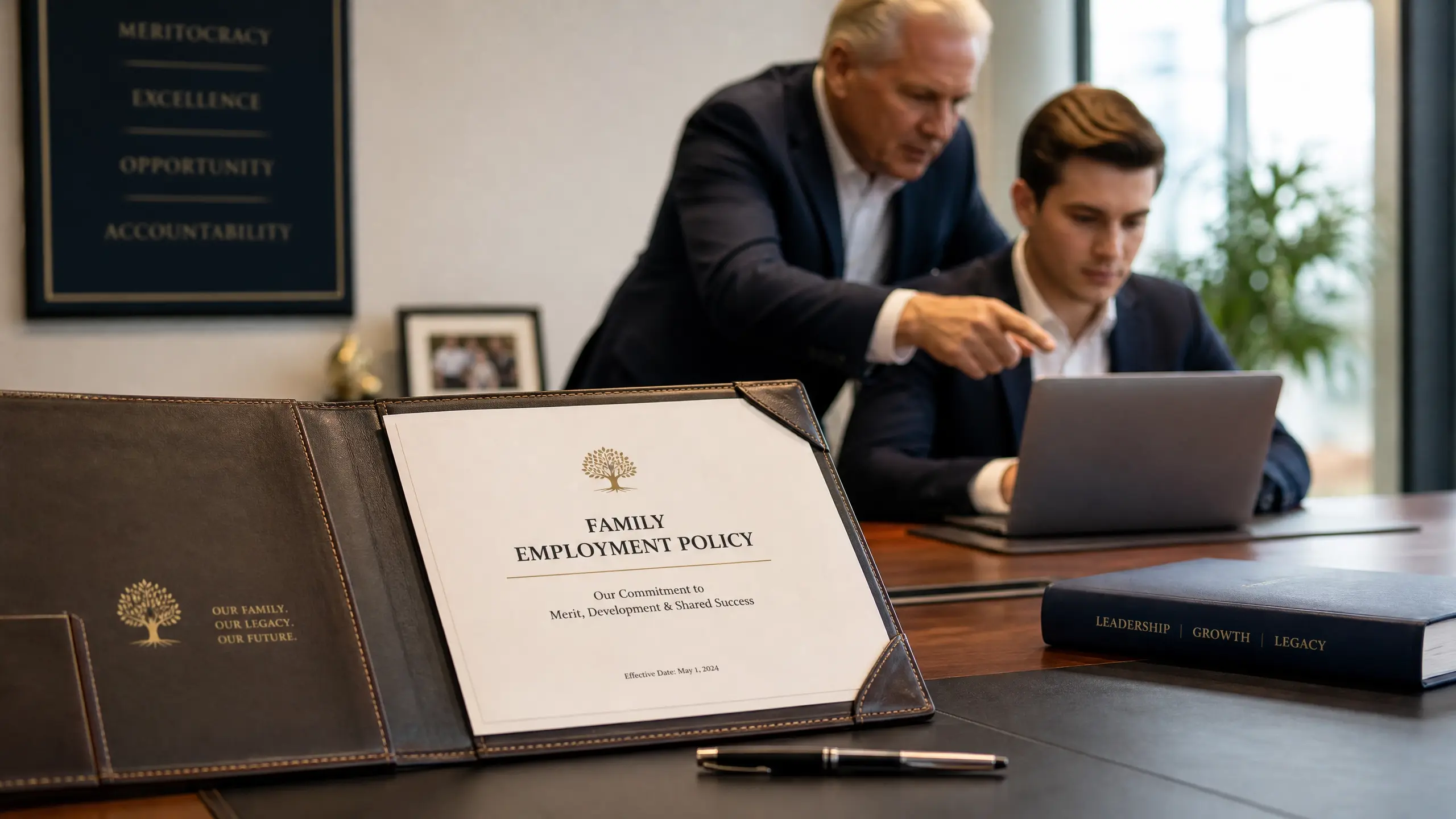
The criteria and process by which family members can join the business as employees. Qualifications, experience, and performance expectations for family employees. Remuneration principles for family members working in the business. The process for addressing underperformance by a family employee. These policies are among the most practically important in the constitution and among the most frequently absent in family businesses that have not formalised their governance.

A family constitution is not just a governance document. It is a statement of who your family is, what your business stands for, and what you are building together for the generations ahead. It is one of the most meaningful and lasting things a family business can create.
Families that have done this work consistently tell us the same thing: they wish they had started sooner. The conversations are difficult. The process requires commitment. But the result, a family that is genuinely aligned, a business that is clearly governed, and a document that will serve the family for generations, is worth every moment of the effort.
We work with a select number of families at any given time to ensure every engagement receives the depth of attention it deserves. We welcome the opportunity to discuss your family's specific situation and how we can help you create a family constitution that truly reflects your family's values, agreements, and vision.
All enquiries are treated with complete confidentiality
Empowering Families, Empowering Businesses
© 2026 Family Biz Solutions. All rights reserved.